So for the final "educational" day of Marine Naturalist Training, we had quite a bunch of subjects to go over! We had a Orca identification lab, a bunch of information about the different birds, mustelids, and various wildlife that is associated with the ecosystems here, as well as a talk on Orca acoustics. I am in love. There is just that thrilling feeling you get when you hear someone talk about the different Orca languages and get to hear how their language is evolving and how the different pods have different accents and the different ecotypes can't even really speak the same language.
THRILLING, I TELL YOU.
Then we had a dinner lecture on how to effectively communicate with your audience. Gosh, do I love this sort of thing. It's the informal education experience that I've always wanted. I am going to try and do so much with what I learn!
Showing posts with label learning with Sarah. Show all posts
Showing posts with label learning with Sarah. Show all posts
Tuesday, July 23, 2013

Friday, July 19, 2013
Lime Kiln Naturalists
The main highlight of today was the multiple field trips--and the surprise visitors! To start off the day, we went down to Lime Kiln State Park to learn about the history of the lighthouse as well as about Orcas from specialist Bob Otis! A fellow Wisconsinite, Bob Otis comes from Ripon College and has studied the Orcas here for longer than I've been alive!
So, during the lecture I learned that Orcas are cool. This was not a surprise. I learned some new stuff, but most of it was stuff that I already knew. I am learning (however slowly)!
After that, we had a lecture on geology. I had no idea that you could get so much interesting history from the rocks here! Apparently, the San Juan Islands (or at least the land that would become the San Juans) started out as part of Baja and the South Pacific. Also, there were a TON of glaciers here.
After the lecture we went off on a geology field trip.
But then, who did we see but...

And then the entire field trip went off the rails. Of course, it's us, isn't it?

Only one problem: we couldn't identify who we were seeing.

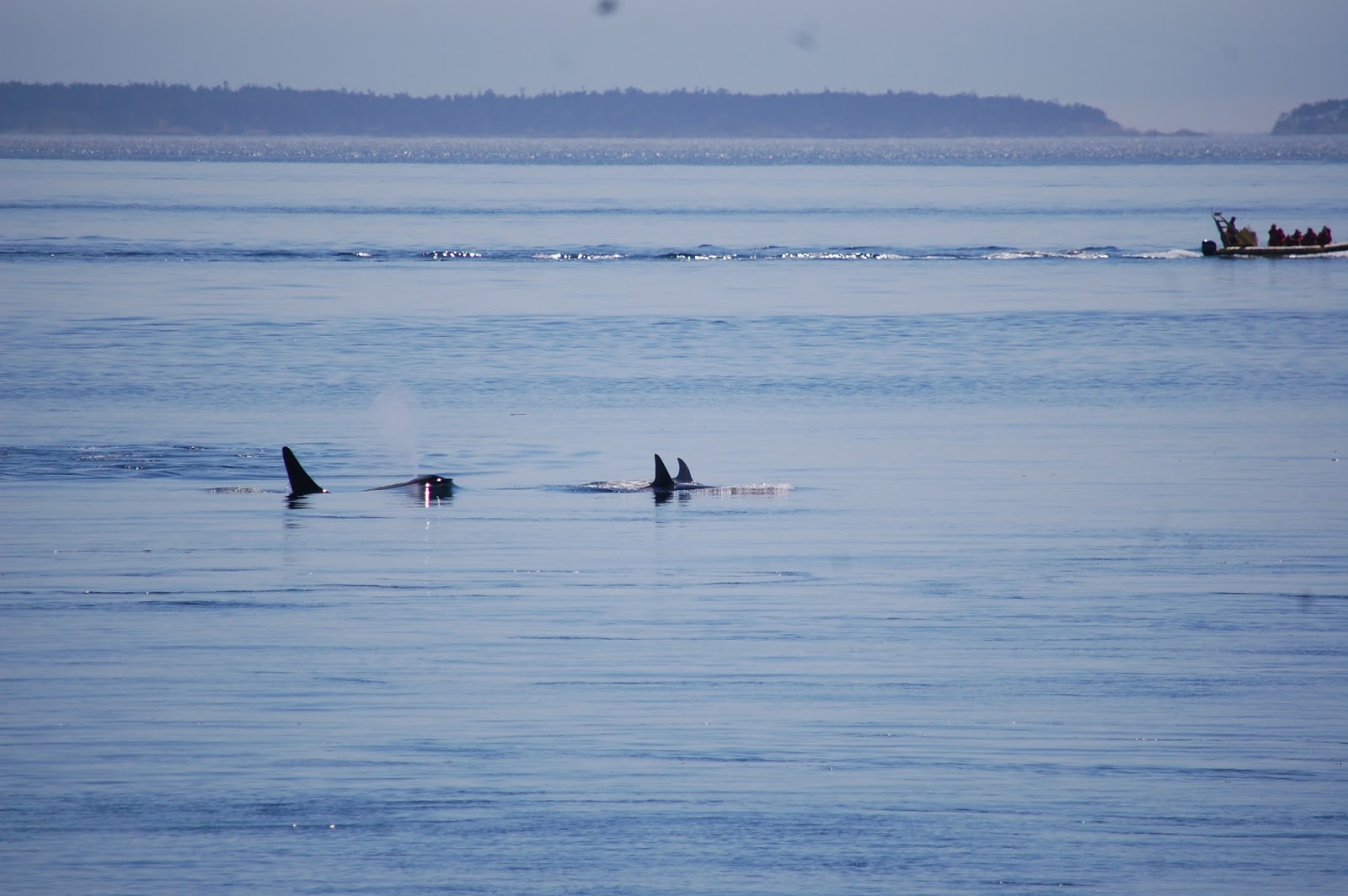
It was a huge mystery. We heard that it was the L-22s, but they were missing Mega!

And then we realized--these were the transients (the T-30s, to be exact (but we didn't find that out till much later))!
And they had their little one-year old with them!

We continued on with our field trip, however, making tracks from Lime Kiln to South Beach (and American Camp). After it ended, there was a notice--the L-22s were headed down towards the island and could be there in a couple of hours?
Intern Michael (my fellow education intern) offered to drive a couple of us non-car people out to Lime Kiln to wait. And wait we did--over four hours!
We were joined by Michael's parents and sister, who were visiting the island. They were also accompanied by dinner. They are a kind and noble people, Michael's family--super generous as well (and I'm not just saying this because my stomach was filled)!


And then we saw them, highlighted against the rays of the dying sun. Unfortunately, this is the only picture that isn't completely blurred that I managed to capture.

But it was the L-22s~!
So, during the lecture I learned that Orcas are cool. This was not a surprise. I learned some new stuff, but most of it was stuff that I already knew. I am learning (however slowly)!
After that, we had a lecture on geology. I had no idea that you could get so much interesting history from the rocks here! Apparently, the San Juan Islands (or at least the land that would become the San Juans) started out as part of Baja and the South Pacific. Also, there were a TON of glaciers here.
After the lecture we went off on a geology field trip.
 |
| Look at the basalt |
 |
| Very nice basalt |
And then the entire field trip went off the rails. Of course, it's us, isn't it?
Only one problem: we couldn't identify who we were seeing.
It was a huge mystery. We heard that it was the L-22s, but they were missing Mega!
 |
| But then we started looking at the female's fins |
 |
| They were super pointy--too pointy to be Residents |
And they had their little one-year old with them!
 |
| The baby's in the middle. What a cutie! |
We continued on with our field trip, however, making tracks from Lime Kiln to South Beach (and American Camp). After it ended, there was a notice--the L-22s were headed down towards the island and could be there in a couple of hours?
Intern Michael (my fellow education intern) offered to drive a couple of us non-car people out to Lime Kiln to wait. And wait we did--over four hours!
We were joined by Michael's parents and sister, who were visiting the island. They were also accompanied by dinner. They are a kind and noble people, Michael's family--super generous as well (and I'm not just saying this because my stomach was filled)!
 |
| The Lime Kiln Lighthouse |
And then we saw them, highlighted against the rays of the dying sun. Unfortunately, this is the only picture that isn't completely blurred that I managed to capture.
But it was the L-22s~!
Thursday, July 18, 2013
Marine Naturalist Training
So as part of my internship I am attending a Marine Naturalist Training program put on by the Whale Museum and organized (and partially taught) by my boss, Cindy. It's only the first day, but already I have a wealth of information.
We got these giant binders full of information and with a schedule. It's six grueling days of intense training and then BAM! we're done! Today was mostly about salmon. We learned about the five different types of local salmon (Chinook/King, Pink/Humpy, Coho, Sockeye, Chum) and how they differ in their lifestyles as well as the fact that over 131 different species depend on these salmon here.
I don't really want to type out the whole life cycle of a salmon, so instead, I'll just give you guys some new vocab I learned.
Estuary: the part of the salmon's life cycle when it transitions from living in fresh water to living in salt water. Some very important biological changes happen during this stage and it takes different lengths of time for the different salmon involved. Some salmon barely have any estuary part of their cycle, while others can spend up to 6 or 7 years for the whole process.
Keystone Species: a species that, if removed from an ecosystem, could result in the loss of the entire ecosystem. A.k.a. a species that everything depends on. (hint: salmon is this)
Smolt: salmon that are experiencing the changes that are turning them from freshwater to saltwater fish.
In addition to learning about salmon, we also had a representative from Wolf Hollow (the local rehabilitation center for animals) come and talk about all the animals native (and invasive) to the San Juan Islands. It's super interesting to realize that some islands only host certain animals and even more cool that there are some endangered species that live in only a precious few biospheres that this island provides. Did you know that they have over eight species of bats right here on San Juan Island?! I am super pumped.
We got these giant binders full of information and with a schedule. It's six grueling days of intense training and then BAM! we're done! Today was mostly about salmon. We learned about the five different types of local salmon (Chinook/King, Pink/Humpy, Coho, Sockeye, Chum) and how they differ in their lifestyles as well as the fact that over 131 different species depend on these salmon here.
I don't really want to type out the whole life cycle of a salmon, so instead, I'll just give you guys some new vocab I learned.
Estuary: the part of the salmon's life cycle when it transitions from living in fresh water to living in salt water. Some very important biological changes happen during this stage and it takes different lengths of time for the different salmon involved. Some salmon barely have any estuary part of their cycle, while others can spend up to 6 or 7 years for the whole process.
Keystone Species: a species that, if removed from an ecosystem, could result in the loss of the entire ecosystem. A.k.a. a species that everything depends on. (hint: salmon is this)
Smolt: salmon that are experiencing the changes that are turning them from freshwater to saltwater fish.
In addition to learning about salmon, we also had a representative from Wolf Hollow (the local rehabilitation center for animals) come and talk about all the animals native (and invasive) to the San Juan Islands. It's super interesting to realize that some islands only host certain animals and even more cool that there are some endangered species that live in only a precious few biospheres that this island provides. Did you know that they have over eight species of bats right here on San Juan Island?! I am super pumped.
Monday, July 8, 2013
Appearence of the Superpod!
Oh. My. God.
The most exciting thing has happened today--the Superpod is coming in!
What is the Superpod, you ask?
Why, J, K, and L-pod all combining together to form a giant pod and swimming together. This is amazing because K-pod hasn't been around all summer (quite unusual for them). This is some of the best Orca news we've had in a long time!
I'm stuck at home, but I'm sure to be hearing about it from the others at the Whale Museum. I'll share any interesting stories I hear!
The most exciting thing has happened today--the Superpod is coming in!
What is the Superpod, you ask?
Why, J, K, and L-pod all combining together to form a giant pod and swimming together. This is amazing because K-pod hasn't been around all summer (quite unusual for them). This is some of the best Orca news we've had in a long time!
I'm stuck at home, but I'm sure to be hearing about it from the others at the Whale Museum. I'll share any interesting stories I hear!
Saturday, June 29, 2013
Post-Potlatch
Among the Southern Resident Killer Whales, there is a matriline that has become adopted by the Samish Indian Nation. This matriline is in J-pod and the newest member has been named today. J-49 has been named T’ílem Ínges (pronounced “tēēlem ēēnges”), which means "singing grandchild" in the Samish language.
This naming ceremony was part of a potlatch--which is basically a gift-giving festival practiced in the Pacific Northwest and Canadian coastal tribes. There is a long history of potlatches (and the subsequent banning by both the Canadian and American governments) among the native peoples of this area.
As the nicknames of the whales are given out by the Whale Museum, Whale Museum staff was invited to this ceremony--and I was lucky enough to be granted an invitation!
Before the potlatch there was a canoe blessing ceremony--the canoes were given names and were then paddled around by members of the tribe.


After the canoe ceremony, there was a big potluck (also part of the potlatch) and then the naming ceremony began. Despite being reassured that it was okay to take pictures, I only took a few (and none of them were too good).


The naming ceremony itself incited many emotions in me. For one, it was a fascinating look into the blossoming culture of the Samish. Though I fully admit, I did not do much research before the ceremony, throughout the entire event, it was mentioned how the Samish lost most of their culture and were slowly regaining it. It was really touching when the elders leading the ceremony mentioned that they hoped that their young ones would grow with T’ílem Ínges and bring new meaning and life into the Samish Nation. At times it did seem to drag on, and there definitely could have been more projecting of voices (sometimes it was a little hard to hear the speakers!), but all in all, it was a truly enjoyable and memorable expereience.
This naming ceremony was part of a potlatch--which is basically a gift-giving festival practiced in the Pacific Northwest and Canadian coastal tribes. There is a long history of potlatches (and the subsequent banning by both the Canadian and American governments) among the native peoples of this area.
As the nicknames of the whales are given out by the Whale Museum, Whale Museum staff was invited to this ceremony--and I was lucky enough to be granted an invitation!
Before the potlatch there was a canoe blessing ceremony--the canoes were given names and were then paddled around by members of the tribe.
After the canoe ceremony, there was a big potluck (also part of the potlatch) and then the naming ceremony began. Despite being reassured that it was okay to take pictures, I only took a few (and none of them were too good).
The naming ceremony itself incited many emotions in me. For one, it was a fascinating look into the blossoming culture of the Samish. Though I fully admit, I did not do much research before the ceremony, throughout the entire event, it was mentioned how the Samish lost most of their culture and were slowly regaining it. It was really touching when the elders leading the ceremony mentioned that they hoped that their young ones would grow with T’ílem Ínges and bring new meaning and life into the Samish Nation. At times it did seem to drag on, and there definitely could have been more projecting of voices (sometimes it was a little hard to hear the speakers!), but all in all, it was a truly enjoyable and memorable expereience.
Saturday, June 22, 2013
Orca Sing
Not only did I work the morning shift at the gift shop today, but I also
went to Orca Sing. What is Orca Sing? It's a festival where a couple of
bands play at Lime Kiln State Park--and luckily for us, the whales were
out during the show! That hasn't happened for over three years!

There were two whales, a male and a female. You can tell the male by his long, straight fin and the female by her more curved (and shorter) fin.
 |
| The male |
 |
| The female |


 |
| Soundwatch was out as well! |

It's likely that these two whales are somewhat related--mother and child, grandmother and grandson, or sister and brother.


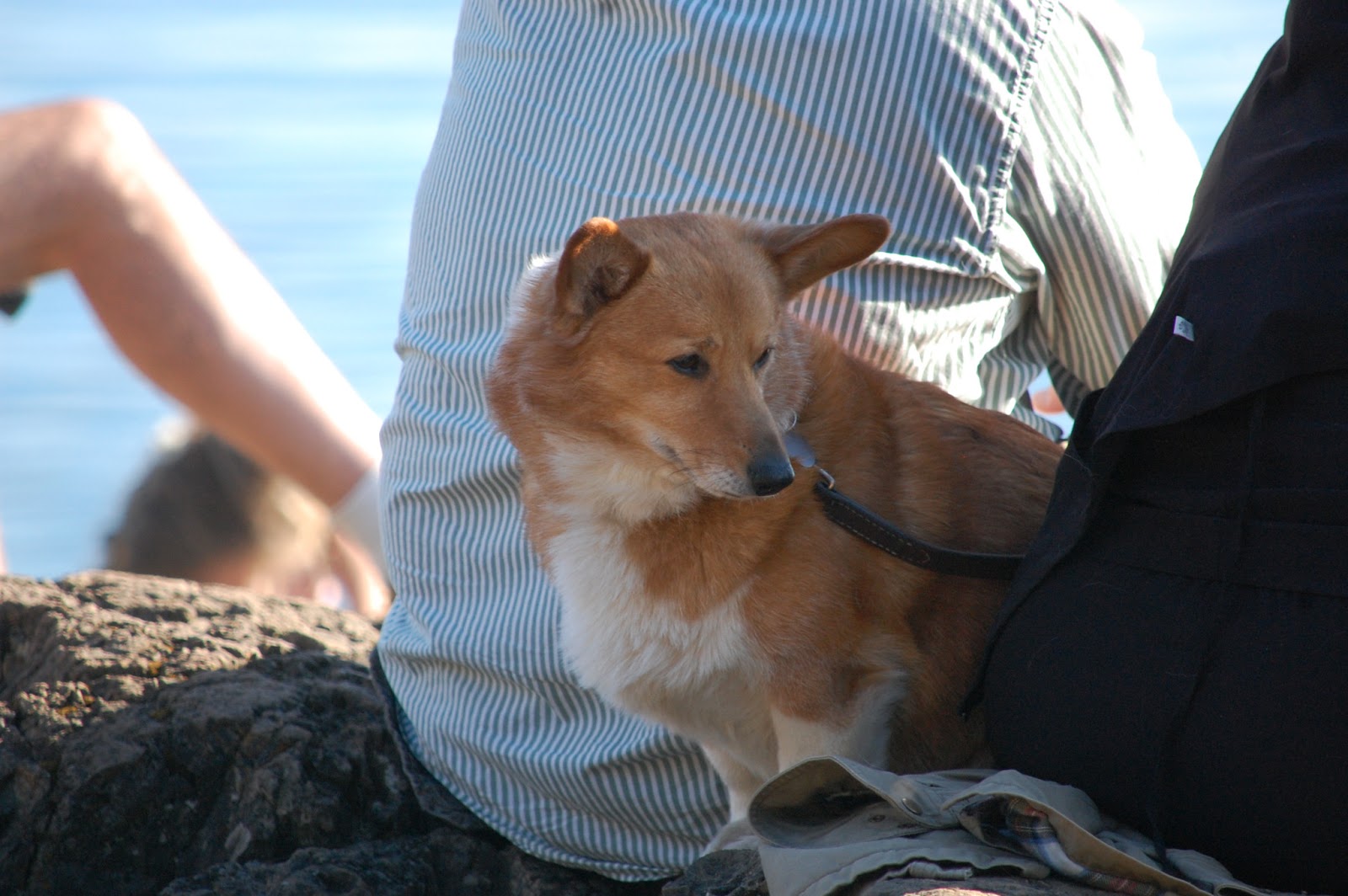 |
| And there was Oliver, as well! |


 |
| Kelp! |

Monday, June 10, 2013
Adventure to the Middle School
Mondays and Tuesdays are usually my day off, but today I took a special detour from my schedule to help out with an educational program for the Spring Street Middle School. The seventh graders had a "Marine Exploration" day and I and Patrick (the head of the stranding network) worked together to create an interactive activity for the students to participate in.
For those of you who don't know, stranding is when a marine mammal is stuck on the shore and can't get back to water. There are a variety of reasons: sickness, injury, loose nets, and death, to name a few. Because of the Marine Mammal Protection Act, normal people can't touch marine mammals--so that means that even if an animal needs help or a body needs to be removed, it can't happen. Luckily, there was an amendment granted in the '90s that allows for trained people to remove and help marine mammals.
So the activity I created together with Patrick was a stuffed animal stranding. Children were given tape measures and stranding sheets and then a stuffed animal with some cards on top of it. The cards were used to convey information on the animal and gave specific information that was needed by the sheet. Then the kids measured their stuffed animal as if it was a real stranding. I think it was a pretty good hit. The students enjoyed both the stuffed animal and hands on activity where they got to touch the skulls and pelts of animals that had been stranded (the stickers proclaiming them "Junior Responders" were also a big hit).
I think it went very well and so did the teachers at the school and Patrick. I'm glad it happened. As it is now, I'm working at the gift shop until closing today--it'll be the first time I close by myself!
As for the previous week (or lack of posts thereof), nothing of real blog-worthy note happened. It was just me working at the shop and sitting in on lectures by Cindy. Soon I will have learned enough to start giving them on my own, I hope!
For those of you who don't know, stranding is when a marine mammal is stuck on the shore and can't get back to water. There are a variety of reasons: sickness, injury, loose nets, and death, to name a few. Because of the Marine Mammal Protection Act, normal people can't touch marine mammals--so that means that even if an animal needs help or a body needs to be removed, it can't happen. Luckily, there was an amendment granted in the '90s that allows for trained people to remove and help marine mammals.
So the activity I created together with Patrick was a stuffed animal stranding. Children were given tape measures and stranding sheets and then a stuffed animal with some cards on top of it. The cards were used to convey information on the animal and gave specific information that was needed by the sheet. Then the kids measured their stuffed animal as if it was a real stranding. I think it was a pretty good hit. The students enjoyed both the stuffed animal and hands on activity where they got to touch the skulls and pelts of animals that had been stranded (the stickers proclaiming them "Junior Responders" were also a big hit).
I think it went very well and so did the teachers at the school and Patrick. I'm glad it happened. As it is now, I'm working at the gift shop until closing today--it'll be the first time I close by myself!
As for the previous week (or lack of posts thereof), nothing of real blog-worthy note happened. It was just me working at the shop and sitting in on lectures by Cindy. Soon I will have learned enough to start giving them on my own, I hope!
Saturday, May 25, 2013
Around the Isle of San Juan
Saturday was just supposed to be a
lazy day off. I had no work, no place to go, nothing to do. So what did I do? I
slept in, for one thing. Then I had a lazy day in with guides to marine life as
well as library books. And then, fate called me.

Traveling south, we stopped by the English Camp National Historic Park and then went to an alpaca farm. Yes, you heard me right, an alpaca farm. There were many fuzzy, adorable alpacas which reminded me somewhat of the goats my family used to raise. It was almost an overload of cuteness. We drove past the San Juan County Park, Lime Kiln State Park, and then took a detour to see a lavender farm. Then we went down to see the False Bay and drove until we got to the American Camp National Historic Park. During that leg of the journey, we saw some animals—foxes, to be precise!

…Well, I say fate, but what I mean
is my lovely benefactor. He had time, a
car and offered to show me around the island. Who was I to say no? I answered
the call and got all ready and then we were off!
First was to stop in Roche Harbor,
the other main city in San Juan Island, and also on the opposite tip of the
island. During the drive, I was regaled with anecdotes about the island, its
history, and his experiences in the marine naturalist training program. It was
very informational. Roche Harbor is one of the closest points in the Pacific
Northwest to Canada. I could see Vancouver Island from there! We had lunch,
took a look at the marina, explored an English garden, and then headed south. I
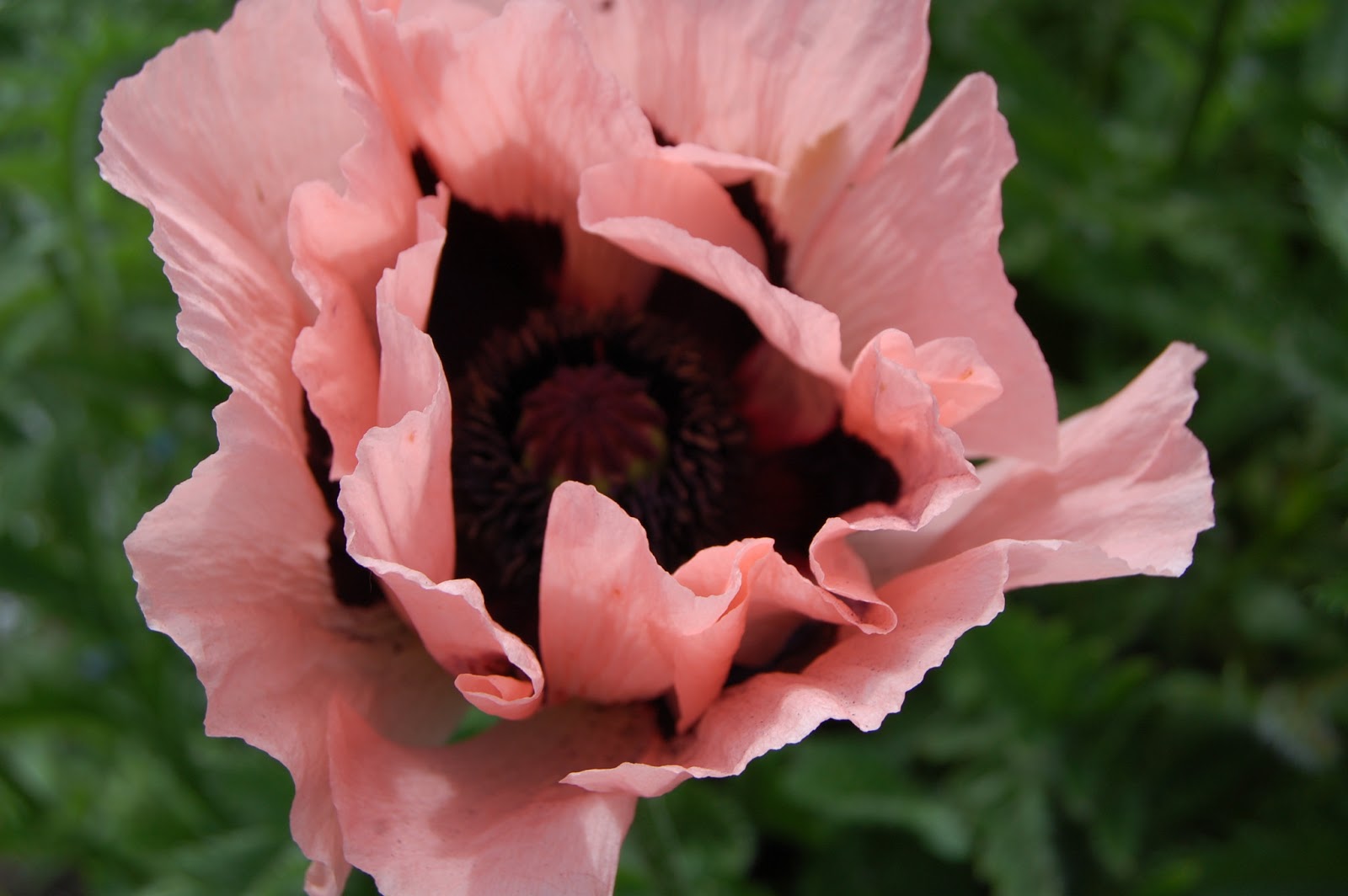
must say that the English garden we saw had some truly spectacular poppies.
 |
| Roche Harbor |
 |
| The marina |
Traveling south, we stopped by the English Camp National Historic Park and then went to an alpaca farm. Yes, you heard me right, an alpaca farm. There were many fuzzy, adorable alpacas which reminded me somewhat of the goats my family used to raise. It was almost an overload of cuteness. We drove past the San Juan County Park, Lime Kiln State Park, and then took a detour to see a lavender farm. Then we went down to see the False Bay and drove until we got to the American Camp National Historic Park. During that leg of the journey, we saw some animals—foxes, to be precise!
 |
| We also saw foxes |
Following that, we ambled down to
South Beach, Cattle Point, and Cape San Juan. The views were breathtaking. If
were a weaker woman, I would have already decided to move here due to the
gorgeous scenery, however I am determined to live in the South and the
Southwest just to get my bearings straight before I decide to permanently settle
down.
 |
| South Beach |
 |
| More of South Beach |
After that, we headed back, as he
needed to catch the ferry. I had dinner and then got ready for bed. But what an
excellent day!
Thursday, May 23, 2013
Party of Pinnipeds
Today we focused on pinnipeds and
orcas. Pinnipeds (pinni meaning flipper, and ped meaning foot), are mammals
that live in water and have flippers for feet. There are three basic types of
pinnipeds: seals, sea lions, and walruses, but you can only find Harbor Seals and
Stellar Sea Lions in Friday Harbor. Despite both being classified under the
name ‘pinniped,’ there are several differences between seals and sea lions.

Seals sport a spotted coat that
covers every inch of their body. We have a touch table at the museum, and I can
assure you that seal pelt is super soft, fine and I can see why people would
want to wear it. It is illegal now,
however, to hunt the creatures here and for that I am glad. Seals also have
special whiskers that are “beaded.” Beaded whiskers mean that they are bumpy to
the touch. And actually, these whiskers aren’t really whiskers at all: they’re
called vibrissae. Vibrissae work in the same way whiskers on a cat do, however,
and sense changes in the water as well as movement around the animal itself. Seals
have short, stubby fins and can only move by dragging themselves around. They also
have no external ears—only ear holes.
Sea Lions, on the other hand, are
quite larger than seals and are usually a solid color, such as dark brown for the
California Sea Lion or golden brown for the Stellar Sea Lion. Their vibrissae
are straight and smooth, much like uncooked spaghetti, and much longer than a
seal’s. Their pelt, interestingly enough, leaves the flippers bare—and they can
walk (or kinda hop) rather than pulling themselves on their bellies, like seals.

Unlike the seals, they also have
tiny ear stubs, are larger in size, more social, and much nosier.
There is so much to learn about
Orcas, I’m hoping to do it in an upcoming post. :)
Tuesday, May 21, 2013
The Adventures of Sarah and Stinky Bill
Tuesday was a pretty hectic day! On
this momentous day, we were visited by around 60 to 70 fourth graders to learn
about Gray whales. The programming was
fantastic! The Whale Museum has a number of whale skeletons, but the fourth
graders actually got to put together a disarticulated gray whale skeleton found
in 1995! This skeleton even has a name, Stinky Bill! From the head, school groups get to reassemble the spine, ribs, and tail, while identifying different types of bones and trying to figure out how Stinky Bill died.
Now, Gray whales are an interesting
sort of baleen whale. Rather than gathering up water, they head down to the
bottom of a shallower part of the ocean and scoop up mud! Inside this mud is
the food they love to eat—plankton, krill, and their favorite food—amphipods, a small shrimp-like creature.
Because of this, Gray whale baleen is set a
bit wider apart than other baleen whales because it has more sediment to push
out. Much like the other baleen whales, Gray whales scoop their food out of the
baleen with their tongue (which can weigh up to 2,000 lbs!) and consume about
1.5 tons of krill and other associated creatures a day.
We had multiple
school groups come in and learn this today. And after hearing the lecture so
many times, I think I’ve gotten the basics down. But I’m still learning.
Sunday, May 19, 2013
Whales Ahoy!
Today was a super busy day! I woke
up early because the students of the Marine Naturalist Training Program were graduating
and in honor of this, the class had rented a whale watch boat—and I was
invited! Despite my earlier luckiness in seeing J-pod, there were no orcas
today. But there were plenty of sea lions, seals and even a Minke!


Minke whales are baleen whales which mean they have no teeth, only a filtering system made out of keratin, the same protein that makes up our hair and fingernails. They scoop up lots of water and small animals, such as ghost shrimp and krill, and then filter it out. However baleen is pretty hard to clean, so Minke whales have a nickname—stinky Minkes. Once you get a whiff, you can never forget. This can be smelled whenever a Minke comes up for air.


 |
| Harbor seals |
 |
| Steller sea lions |
 |
| Minke whale! |
Minke whales are baleen whales which mean they have no teeth, only a filtering system made out of keratin, the same protein that makes up our hair and fingernails. They scoop up lots of water and small animals, such as ghost shrimp and krill, and then filter it out. However baleen is pretty hard to clean, so Minke whales have a nickname—stinky Minkes. Once you get a whiff, you can never forget. This can be smelled whenever a Minke comes up for air.
 |
| Look at the view! |
 |
| Friday Harbor from the boat |
After the trip was done, Kate and I
were immediately carted off to the next part of our internship—Soundwatch. Soundwatch
is an organization run by the Whale Museum that monitors and records boaters
around whales as well as provides information for them. J-pod was out today, so we had quite a busy
day speeding around in our boat and informing people of the proper way to view
whales. On our downtime, I even managed to get a few shots, but due to my lack
of a telescoping lens, you have to make with zooming in on the photographs
themselves. The upside-down black 'v's are the dorsal fins.
 |
| This one's a little blurry, but if you look where the blue changes to light blue (in the center), you can see an Orca rolling over to show its flipper! |
 |
| This one's in the center, right at the line where the dark blue turns to light blue |
 |
| This is a couple of them, also on the center line where the blue changes color |
We spent four hours out there,
before heading back to our docking ground. It was quite lovely but the one
thing I would have changed was to put sunscreen on my ears! They’re all
sunburned!
The day ended, as most have so far
on this island, with exhaustion and falling into bed early. I think I’m still a
bit jet-lagged and it shows!
Subscribe to:
Posts (Atom)